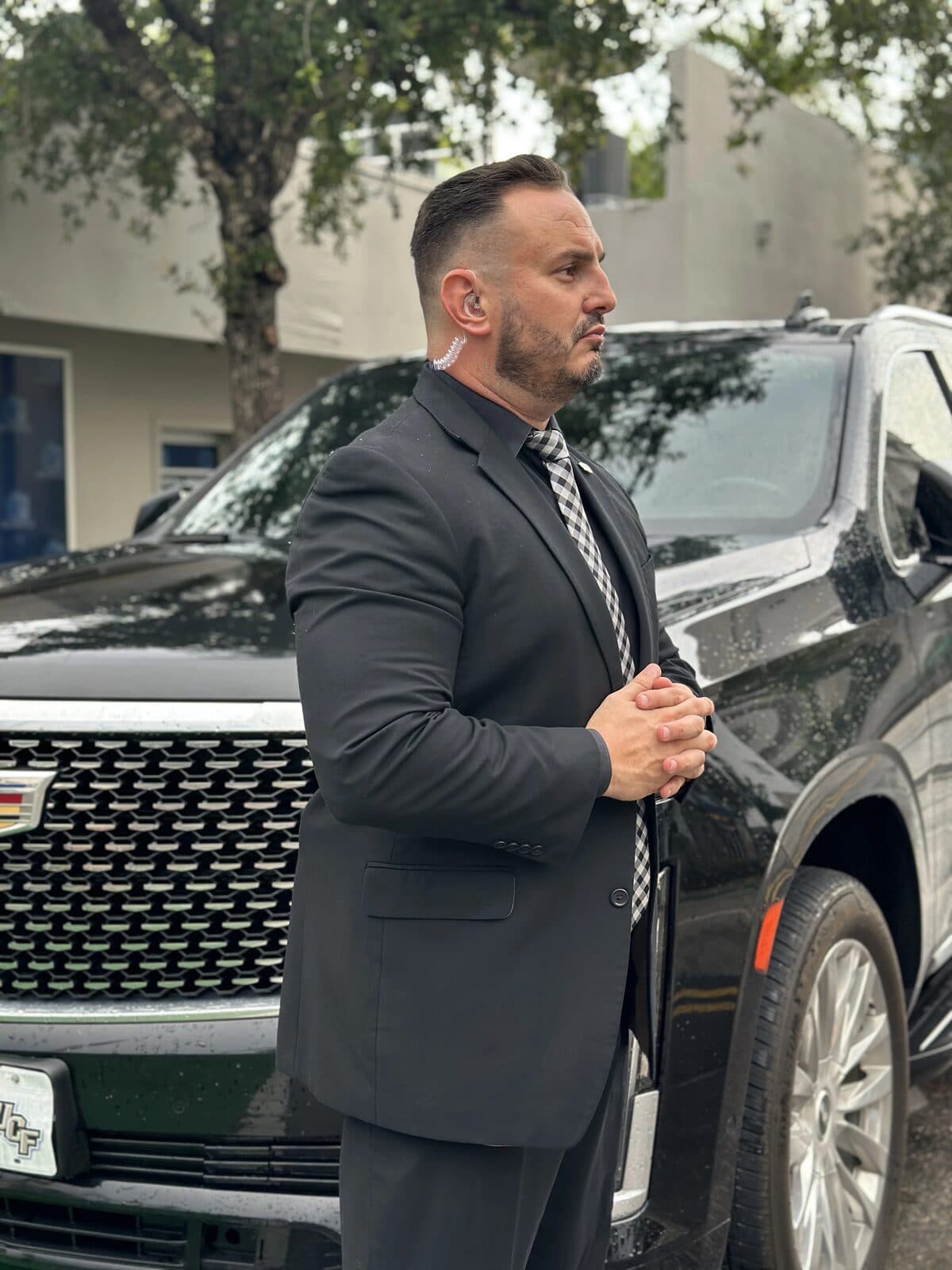
It starts before the principal ever arrives
Most people picture executive protection as a bodyguard walking a step behind someone important. In practice, the visible agent is the smallest part of the job. The work that actually prevents an incident happens days — sometimes weeks — earlier, in what's called advance work: a security team visits every location on the principal's itinerary, walks the routes, times the drive between stops, and flags anything that would slow down an evacuation or give an attacker a predictable choke point.
At Federal Tactics, that advance work follows the same Planning–Prevention–Protection structure we use for every engagement, whether it's a single event or a standing assignment: assess the threat, design around it before anyone arrives, then execute the plan on the day.
Threat assessment is about the person, not a template
A generic security package treats every client the same. A real threat assessment starts with the principal's actual exposure — public visibility, routine predictability, past incidents, industry-specific risk — and builds the coverage plan around that, instead of a one-size-fits-all checklist.
That's also why low-profile protection exists as its own category. For some clients, a visible security detail is itself a liability — it signals wealth or importance to people who weren't paying attention before. Covert protection support keeps the coverage real without advertising it.
What the detail actually covers
Miami adds its own variables
A Miami-based detail has to account for things a copy-pasted plan misses: hurricane-season contingencies, the density of high-rise residential and hotel properties, and an events calendar — Art Basel, Ultra Music Festival — that puts hundreds of thousands of people within blocks of wherever a principal is staying. Federal Tactics has run coverage in this specific environment since 1999, which is a different skill than running the same plan somewhere with a slower, more predictable street.