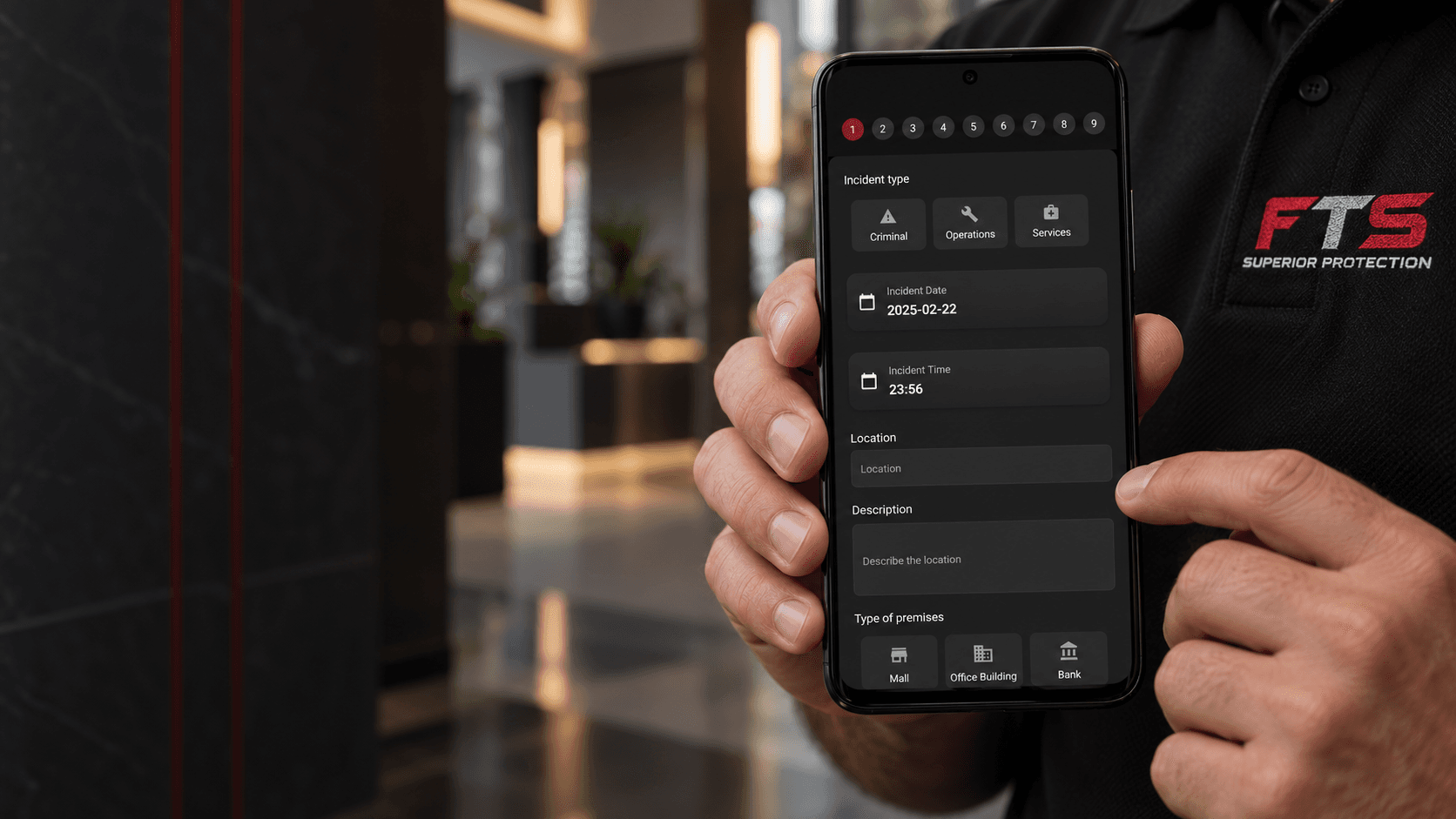
The incident was never the weak link — the paperwork was
An officer trained to handle an incident generally handles it correctly in the moment: the scene gets secured, the right people get called. What used to break down was everything after that — a paper report filled out at the end of a shift, or the next day, reconstructing exact times and who was told what from memory. The gap wasn't in the response. It was in the record of the response.
Federal Tactics built its own reporting app to close that gap: officers file the incident report on their phone, on site, as it's happening — not as a summary written up hours later.
What the app makes an officer decide on the spot
Notification becomes a timestamp, not a memory
The difference isn't that incidents get resolved faster — it's that the record of who was told, and how quickly, stops depending on an officer's memory at the end of a long shift. "Client notified" and "manager notified" are their own fields, each with its own time, because a delayed notification and a same-minute one are two different facts a supervisor needs to be able to see later, not two versions of the same sentence in a narrative.
Where the control actually shows up: the supervisor's queue
Every report an officer files lands on the admin side in one place, and it doesn't stay anonymous in a stack. The dashboard separates reports still waiting on a supervisor's comment from reports already reviewed, alongside a running count of reports filed that month and that year — so a supervisor knows what's outstanding without reading through everything that's already closed.
Every report also ends the same way it started: with a name attached. The reviewing supervisor, their comments, and the date reviewed become part of the same case file the officer opened — so a report isn't just filed, it's signed off.